How Service History Shapes a Patek Philippe Loan
A Patek Philippe that arrives with a clean, dated service history gives a lender something concrete to weigh. Here is how that paper trail connects to the appraisal and, in turn, to the loan value.
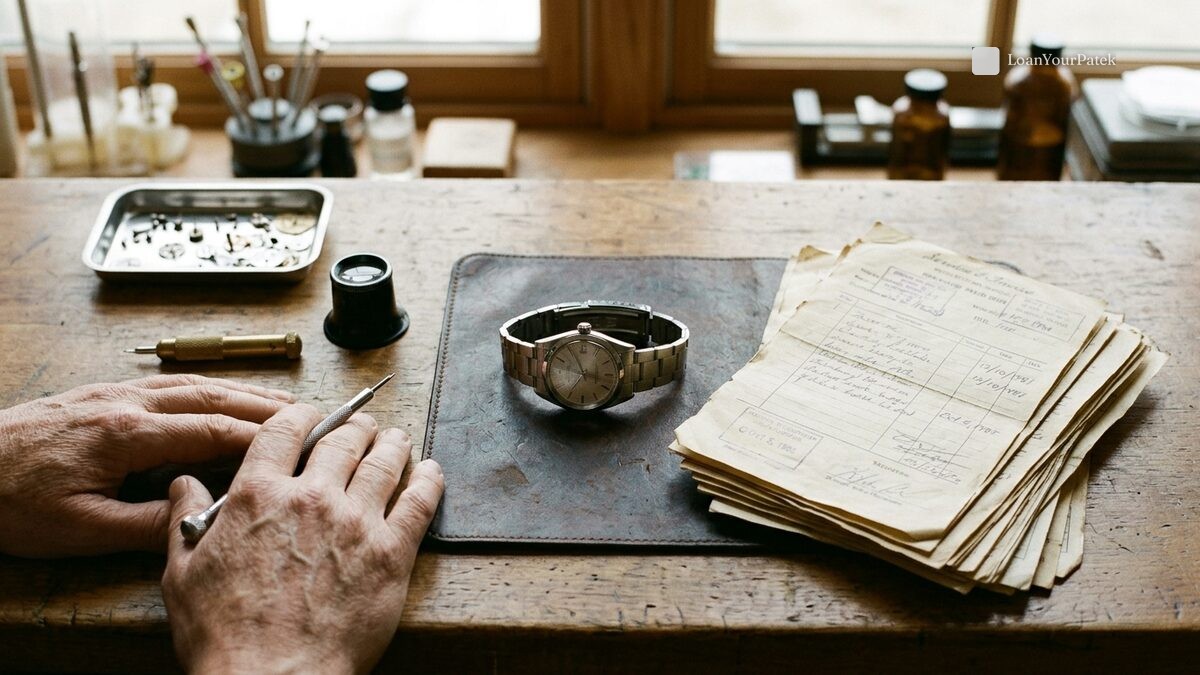
When a collateral lender looks at a Patek Philippe, the question is not only which reference it is, but what condition it is in today. Two examples of the same reference can sit in quite different places depending on originality, wear and the story the paperwork tells. Service history is a large part of that story, and it reaches the loan value through the appraisal.
What the loan is set against. A loan is sized against the value of the watch as collateral: what it could realistically fetch if it had to be sold, not a retail list price. LoanYourPatek, a marketing platform that connects owners with licensed lenders, describes Patek pieces as quoted against a real secondary-market exit. A watch with a documented history is easier to place in that market with confidence, and that confidence is what a lender is really weighing when it reads the file.
What a useful service record contains. Not every folder of papers does the same work. The entries that carry weight are the ones a stranger can read and verify:
- Dated work orders or invoices, so each service can be placed on a timeline
- A plain description of the work: movement overhaul, seal replacement, case work
- A list of any parts replaced, so originality can be judged against the record
- The name of the workshop, with factory servicing the easiest entry to read at face value
- An Extract from the Archives requested from Patek Philippe, where one is available
Factory servicing and independent work. A record from the maker is the simplest for a lender to accept, because the source needs no further explanation. Work done at an independent workshop can still help, provided the invoice is specific about what was done and which parts were touched. A vague receipt that says only serviced tells the appraiser very little. The more precise the entry, the less is left to inference at the appraisal table.
Original parts and the loan. LoanYourPatek's own guidance is direct on this point: a replaced part or a heavily polished case can change the loan, because condition and originality are judged at in-person appraisal, and non-original parts or heavy polishing may lower what can be offered. A service record does not erase that, but it can explain it. If a component was replaced during a documented service, the appraiser can see when and why. If the same change appears with no paperwork behind it, the question stays open, and a lender has reason to be careful with an open question.
Intervals. Dates matter as much as descriptions. A record with entries spread across the life of the watch suggests it was looked after steadily; a single entry followed by a long silence invites questions. This article does not set a recommended interval, and none is needed to make the point: the dates should be visible, and any gaps should be explained honestly. Where a stretch of ownership is undocumented, say so. A plain gap is easier to work with than a reconstructed one.
Where it counts most. For older or complicated pieces, documented service history adds confidence, and on perpetual calendars such as the 5327, 5320G and 5236P, authenticity and service paperwork are critical. These sit in the highest-complexity tier, where a mechanism that has been opened and closed by unknown hands is a larger unknown. On a simpler reference, box and papers support authenticity and help value, and the service file plays a supporting part rather than the lead.
What it does not change. A strong record supports the watch within the market; it does not move the market. The wholesale floor on a 5711, for example, shifts from week to week with auction results, so a quote is tied to what the watch would fetch now. If you are comparing offers, compare them on the same day. Likewise, the figure of up to 65% loan-to-value is a ceiling, not a promise attached to any particular file. The final figure is set by the licensed lender at in-person appraisal.
What to gather before you ask. A preliminary range is only a starting point, but a complete file makes it a better one. When you email hi@luxuryassetloans.com, include:
- Four to six clear photos of the watch, including the case back
- The reference number
- Every service invoice or work order you hold, in date order
- Box, papers and any Extract from the Archives
- A short note on how much you want to borrow and how soon
Appraisal itself is in person, by appointment, at one of the California locations in the network, once the preliminary range is set. Bring the physical paperwork to that appointment. The lender examines the watch and its record together, and the loan value follows from both.
This article is informational. Figures discussed are general guidance, not loan offers, and loan terms are set by the originating licensed lender at appraisal.