Borrowing Against a Patek Instead of Selling It
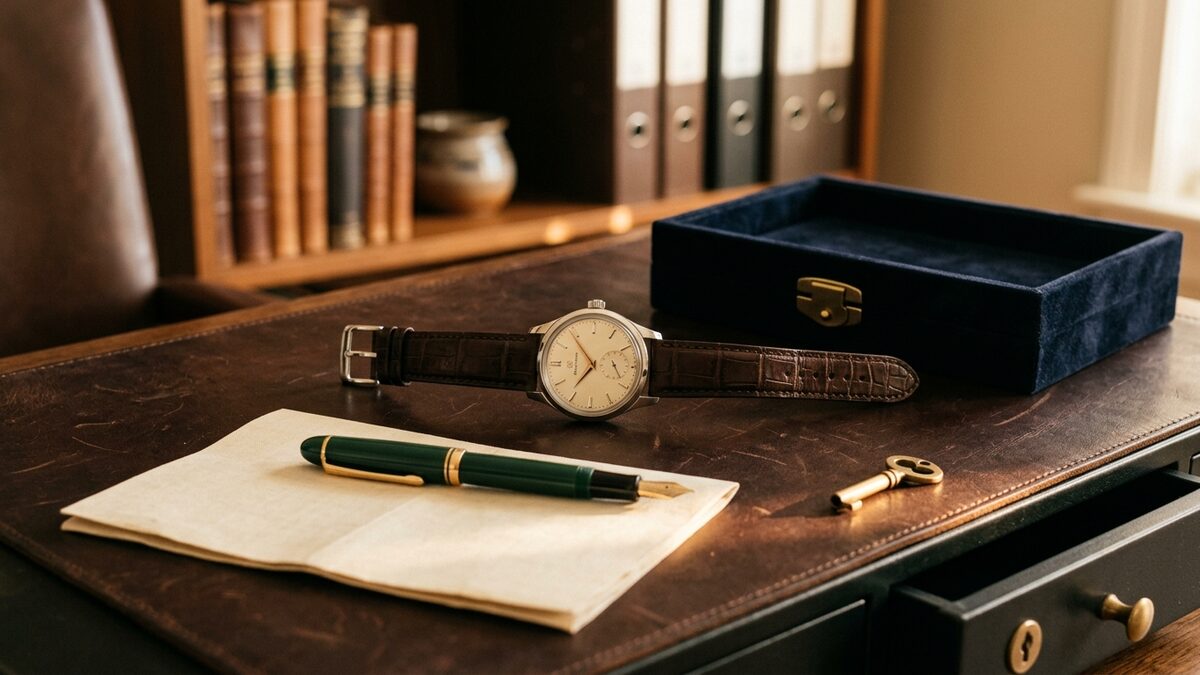
An owner who needs liquidity and happens to hold a Patek Philippe faces a quieter decision than it first appears: whether to part with the object or simply borrow against it. The two routes lead to very different places, and the difference is worth understanding before either is set in motion.
What a Collateral Loan Preserves That a Sale Forfeits
A sale is final. When a watch leaves your hands in a transaction, the relationship ends. You receive a figure, the buyer receives the object, and whatever future the piece holds belongs to someone else. A collateral loan inverts that arrangement. The watch is held as security rather than transferred outright; ownership stays with you, and the piece comes home once the loan is settled.
The distinction matters most with a maker like this one, where certain references have a habit of appreciating rather than fading. A collector who sells a discontinued complication to cover a six-month gap may find the same reference trading materially higher when the gap has passed. Borrowing against the object leaves that upside where it started, in your hands. Selling hands it to the buyer along with the watch.
There is also the matter of what cannot be repurchased at any price. A piece received from a parent, a watch bought to mark a particular year, an example with an unbroken service history and its original documentation intact: these carry a value that no replacement fully restores. Once such a watch is sold, buying back a comparable reference is not the same as recovering the one you had. A loan keeps the specific object, with its specific history, attached to you.
Provenance itself is fragile in a sale. The chain of ownership, the original papers, the accumulated service records; all of it transfers with the watch and begins a new chapter under a new name. Repurchasing later, even the identical reference, means starting that record over. Collateral lending interrupts none of it.
A quieter benefit is discretion. A sale enters the object into the market, where its release becomes part of its record. Borrowing against a piece is a private arrangement; the watch is set aside, held, and returned, without ever being listed, photographed for a catalogue, or absorbed into a dealer's inventory. For an owner who prefers that the piece's history stay uneventful, that privacy has real worth.
Practical Considerations That Decide the Route
The first question is timeframe. A loan suits a defined, short horizon: a bridge across a property closing, a tax deadline, a business expense that will be reimbursed, a season of uneven income. If the need is genuinely temporary and repayment is realistic, borrowing keeps the object and solves the problem. If the need is permanent, or repayment is uncertain, a sale may be the more honest choice, since a loan that cannot be repaid eventually resolves into a sale anyway, on less favourable terms.
The second is the sum required relative to the watch's standing in the market. A collateral advance is set against a conservative assessment of the piece, not its optimistic retail figure. An owner who needs close to the full market value in cash, with no intention of return, is describing a sale. An owner who needs a portion of that value for a defined period is describing a loan.
The third is whether you would buy the watch again if you sold it. This is the clarifying question. If parting with the piece feels like a genuine goodbye, and you would not seek to replace it, a sale is clean and appropriate. If the honest answer is that you would want it back the moment your circumstances eased, then selling only to repurchase later, at a higher figure and with a broken history, is the more expensive path. The loan simply removes that round trip.
Market timing is the fourth consideration. Selling into a soft market locks in the softness. A watch you are compelled to release during a quiet stretch will not wait for a stronger one. A loan lets the object sit through an unfavourable window and be sold, if it must be sold at all, when conditions suit you rather than your creditor.
Cost is the honest counterweight. A loan carries a charge for the period the money is outstanding, and that charge should be weighed against the alternative. Set against a sale that would be reversed later at a higher repurchase price, the cost of borrowing is often the smaller number. Set against a sale the owner is content to make permanently, borrowing is simply an expense with no offsetting return. The comparison only makes sense once you know which kind of owner you are.
Condition and completeness shape both routes. A watch with its box, papers, and a coherent service record will command a stronger sale and support a more generous advance. The same documentation that raises a sale price raises a loan valuation, so the effort of assembling it is never wasted, whichever route you choose.
None of this makes one option superior in the abstract. A sale suits the owner who has genuinely finished with the object and wants its full value released in a single stroke. A loan suits the owner who values the piece beyond its cash figure and needs that figure only for a while. The watch is the same in both cases; what differs is whether you intend to see it again, and how much that intention is worth to you once the money has been repaid.