Patek Grand Complications as Loan Collateral
A grand complication is the most demanding object Patek Philippe makes, and when one is pledged against a loan it is also among the hardest to value quickly. A lender is not buying the watch; it is estimating what the piece will reliably return if the loan is not repaid, and that figure rests on far more than the reference number engraved between the lugs.
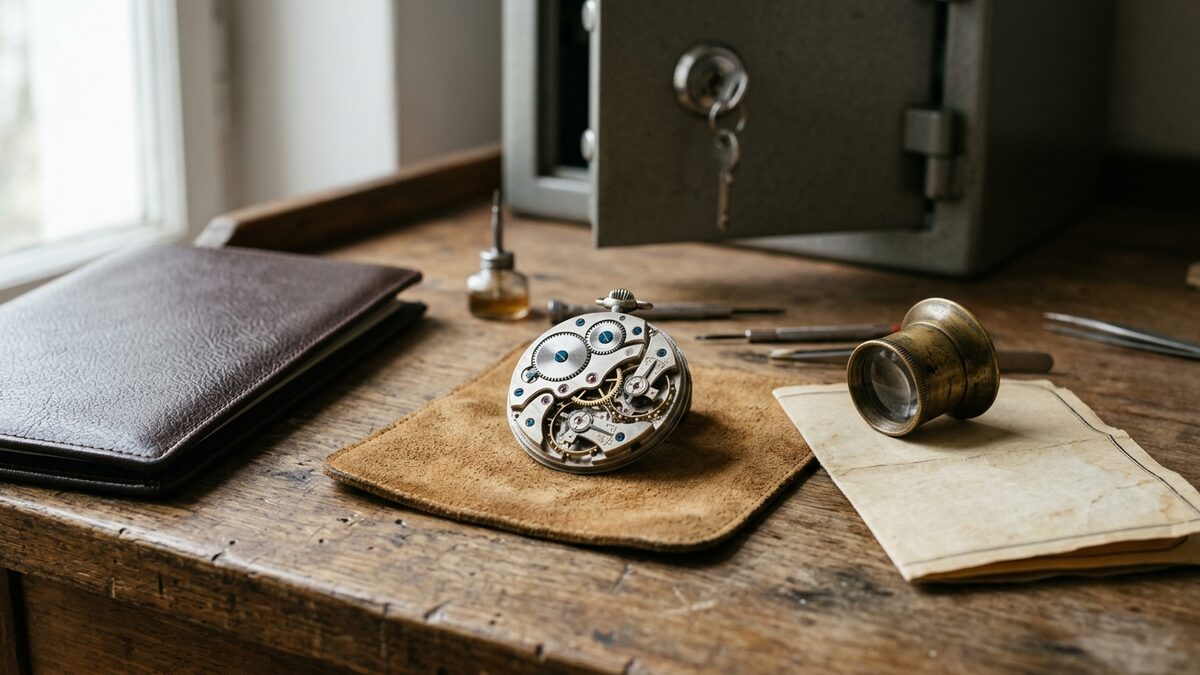
Most collateral valuations begin with a simple question: what is the object worth in the open market today, and how much of that value will hold under pressure. For a time-only or lightly complicated Patek Philippe, that question resolves fairly cleanly. Comparable sales are plentiful, condition is easy to read, and a lender can price the piece against a deep record of transactions. A grand complication resists that convenience. It is rarer, its buyers are fewer, and the very things that make it desirable also make it slower to convert into cash.
Why complexity changes the way a lender reads the watch
It is worth being precise about what the term covers. Patek Philippe reserves grand complication for pieces that combine complications from more than one family: a chronograph paired with a perpetual calendar, or an astronomical indication joined to a striking mechanism. Each family behaves differently in the secondary market, and a lender familiar with the category will price a minute repeater on different assumptions than a perpetual calendar chronograph, even when the two carry similar catalogue values. Understanding which category a watch belongs to is the first step in anticipating how it will be assessed.
A perpetual calendar with a split-seconds chronograph and a minute repeater is not simply a more expensive watch than a calatrava; it is a different kind of asset. Each additional complication narrows the pool of qualified buyers and lengthens the time a piece may sit before it finds one. A lender accounts for that in the discount applied against the appraised figure. The retail or auction comparable sets the ceiling, but the loan is written well beneath it, and the gap widens as the movement grows more specialised.
Condition of the movement carries unusual weight here. On a simpler reference, a service history is reassuring but rarely decisive. On a repeater or a rattrapante, the mechanism is complex enough that a poorly executed repair can meaningfully reduce what a specialist will pay. Lenders who understand the category want evidence that the watch has been serviced by the manufacture or by an approved watchmaker, and they treat an undocumented movement as a source of risk rather than a neutral unknown.
Provenance does more work in this segment than in almost any other. An extract from the archives, the original certificate, the sales documentation, and an unbroken ownership record all shorten the time a piece takes to sell and raise the price it commands. For the rarest complications, a documented history can be the difference between a straightforward disposal and a long, uncertain search for a buyer. A lender reads that documentation as liquidity, and liquidity is what a collateral loan is ultimately priced on.
What an owner should prepare before the appraisal
The owner who arrives prepared shortens the assessment and usually improves the terms. The first item is the paper: the original certificate of origin, any archive extract, service records, and the purchase invoice if it survives. Together these establish that the watch is what it appears to be and that its movement has been cared for. Their absence does not disqualify a piece, but it invites a wider margin of caution.
The second item is the watch itself, presented honestly. Complications should be set and demonstrated where possible, so that a calendar advances correctly and a chronograph resets cleanly. If a function is known to be unreliable, saying so early is better than having it discovered mid-appraisal; a lender values candour because it reduces the risk of a surprise later. Original components matter too. A replaced dial or a non-original bracelet will be noted, and an owner who can account for such changes removes another question from the process.
Photographs prepared in advance can help as well, particularly if the appraisal begins remotely. Clear images of the dial, the caseback, the movement through a display back where fitted, and any hallmarks give a specialist enough to form an initial view before the piece is handled. This rarely replaces a physical inspection for an object of this value, but it can settle the broad range early and let the in-person assessment concentrate on the finer points.
It helps to understand what the appraisal is measuring. The figure that matters to a lender is not the price paid at retail, nor the headline result of a single exceptional auction, but the price the piece would realistically achieve within the window the loan assumes. Owners sometimes anchor to the best comparable they can find; a considered lender anchors to the median and adjusts for condition and demand. Coming to the conversation with realistic expectations makes the whole exchange more productive.
Finally, an owner should think about the loan structure rather than only the number. The ratio of the advance to the appraised value, the term, the cost of storage and insurance while the watch is held, and the process for returning the piece on repayment all shape what the arrangement is actually worth. A grand complication is a considerable object to place in someone else's custody, and the care a lender takes in describing that custody is itself a useful signal of how the piece will be handled.
Timing sits quietly behind all of this. The market for the most complicated references moves in its own rhythm, less tied to fashion than the sport-watch segment and more sensitive to the appearance of a comparable example at auction. A lender will not usually attempt to predict that market, but will build a margin that protects against its slower pace. An owner who appreciates why that margin exists is less likely to read a conservative advance as a lack of respect for the watch, and more likely to see it as an honest reflection of how the category actually trades.
None of this diminishes the pleasure of owning one of these watches. It simply reflects that a grand complication asks more of everyone who handles it, a lender included. The owner who documents the piece, presents it plainly, and understands how its complexity is read will find the assessment far less opaque, and the terms far closer to what the object genuinely deserves.