How Dial Condition Shapes Patek Philippe Loan Value
A Patek Philippe dial is read twice at appraisal: once for the time, and once for what it says about the watch's history. Both readings reach the loan value.
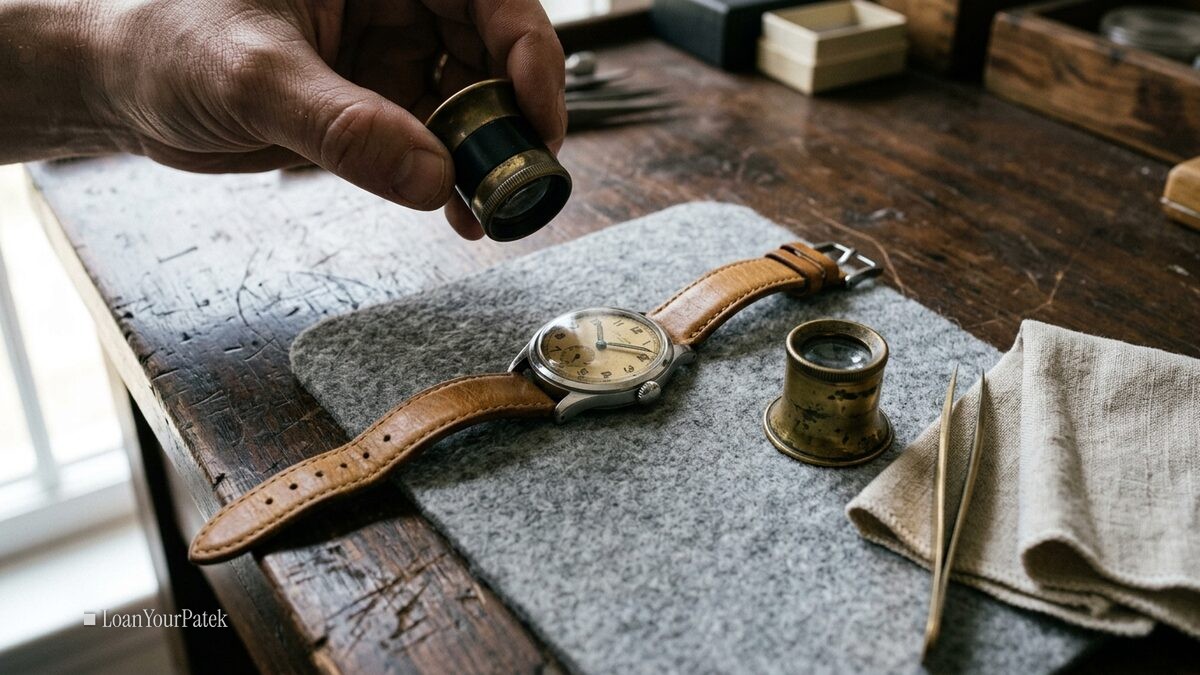
A lender advancing money against a watch is not lending against a reference number alone. It is lending against one specific object, and the dial is where that object's condition is easiest to see. Two examples of the same reference can be worth meaningfully different amounts, and the Vintage Patek page on loanyourpatek.com names dial and hand originality among the reasons. What follows is an editorial look at what an appraiser studies on the dial face, and how those observations connect to the loan value of a Patek Philippe.
Originality comes first. The question is whether the dial, and the hands set over it, are the ones the watch carried from the beginning. A replacement dial or later hands change what the object is as collateral, however handsome they look. The loanyourpatek.com FAQ states that non-original parts may lower what can be offered, and that condition and originality are judged at in-person appraisal. That is why a photograph can start a conversation but cannot close one. The loupe, the lighting, and the watch in the hand do work that a screen does not.
Patina is the second study, and the most misunderstood. Dials age. Luminous material shifts in tone, printed surfaces soften, and lacquer can show fine changes under magnification. An appraiser looks at whether that ageing is consistent across the whole face or whether it is patchy, because even ageing tends to read as the history of a single watch, while uneven change invites the question of what happened to it. Patina is not automatically a flaw, and it is not automatically a premium. How it is weighed is a judgment the licensed lender makes at appraisal, and no article can put a number on it in advance.
Refinishing draws the closest attention. A dial that has been repainted, re-lacquered, or reprinted is no longer an original surface, even when the result looks crisp and bright. A refinished face can photograph better than an honest aged one, which is one more reason appraisers prefer the object to the image. The same reasoning applies to the case. The FAQ notes that heavy polishing may lower what can be offered, and the Vintage page lists over-polishing alongside dial and hand originality as a source of difference between two examples of one reference. Dial and case are read together, as parts of one question about how much of the watch is still the watch.
Legibility is the practical test. Can the time be read at a glance? Are the indices, numerals, and signature intact? Spotting, flaking, or lifting of the surface interrupts the face and can prompt further questions about the condition of the watch beneath it. An appraiser separates stable ageing, which has settled, from damage that interrupts reading or appears to be progressing. The first is part of the dial's character. The second is a condition note that weighs on the figure.
Documentation supports everything above. The FAQ says box and papers support authenticity and help value, and that for older or complicated pieces a documented service history and, where available, an Extract from the Archives requested from Patek Philippe add confidence. On perpetual calendars, authenticity and service paperwork are described as critical. For vintage references, the Vintage page lists prior auction catalog listings, service records, and a documented ownership chain as moving a piece toward the top of its range. A service record that is clear about the dial answers on paper a question the appraiser would otherwise put to the watch.
The connection to the loan figure is indirect but real. The site states that Patek Philippe carries its highest loan-to-value, up to 65%, because pieces are quoted against a real secondary-market exit rather than a retail list price. That 65% is a ceiling, not a promise for any one watch. What a specific watch would fetch now depends on the watch in front of the appraiser, and the dial is a large part of that. A clean, original, legible dial supports the exit value on which the advance is based. A replaced or refinished one gives the lender reason to lower it.
Process matters here too. A preliminary range is set from photos and current market data, and the final number is set at in-person appraisal by the licensed lender. Figures on the site are general guidance, not loan offers. If you are preparing to ask, a few habits help:
- Send 4–6 clear photos, including close condition detail of the dial, hands, and signature.
- Include the reference number and any papers, service records, or an Archive Extract.
- Say plainly if the dial, hands, or case have ever been replaced, refinished, or polished.
- Treat any early range as a starting point, and compare offers on the same day.
Candor costs little. An appraiser who finds a refinished dial that was not mentioned has a reason to doubt the rest of the file, while one who is told at the start can price the object as it is. LoanYourPatek is a marketing platform that connects owners with licensed lenders; it does not originate loans or set terms, and this article is general information, not a loan offer.